Search Articles

After 90 Days of AI-Powered Pricing, Our Wholesale Margins Jumped 8%: Here’s How

arezoo mzadegan June 1, 2026 12 min read

After 90 Days of AI-Powered Pricing, Our Wholesale Margins Jumped 8%: Here’s How

By Artin SmartAgent • B2B Automation Insights

The Pain

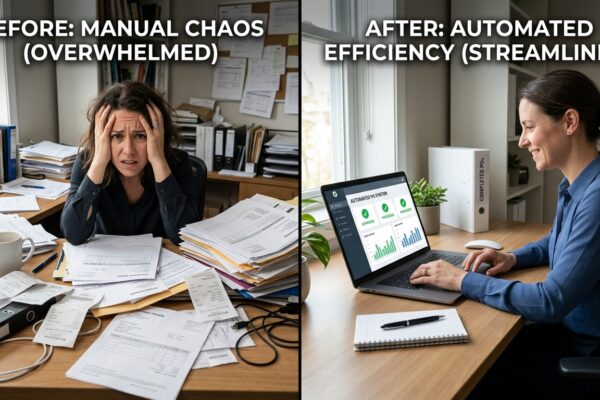
I remember Khalid from Al Quoz, his face etched with the kind of fatigue only a wholesale distributor staring down a mountain of spreadsheets knows. It was 3 AM, and the aroma of stale coffee hung heavy in his small, cluttered office just off Sheikh Zayed Road. He ran a mid-sized electrical supplies distribution business, the kind that’s the backbone of every growing city. But Khalid? He was drowning. Every morning started with a frantic dash to manually update pricing for hundreds of SKUs across dozens of customer tiers. A new shipment of circuit breakers would arrive, the cost would shift by a few fils, and suddenly, his carefully crafted margins were theoretical. He’d underbid a major contractor on a bulk order of cables because he missed a supplier price increase from two days prior. That single mistake cost him AED 15,000 in lost profit, not to mention the hit to his reputation.

His sales reps, bless their hearts, were constantly making pricing errors, too. They’d quote old prices to key accounts, or worse, overprice a standard item to a loyalty customer, sending them straight to a competitor. Khalid called it “death by a thousand cuts,” each tiny pricing misstep bleeding away a bit of his bottom line. He showed me an Excel file, seven tabs deep, bursting with VLOOKUPs that often broke. He spent 10-12 hours a week just trying to keep his pricing straight, a chore that often extended into weekends. His phone rang constantly – customers questioning prices, reps needing approvals, suppliers announcing changes. There was no strategy, just reaction. He was leaving money on the table with every transaction, but he also feared losing customers if he dared to increase prices without real data. The fear of being too high or too low, the sheer volume of SKUs, the ever-fluctuating market, and the constant pressure from competitors had him paralyzed. He wasn’t running a business; he was managing a pricing crisis, day in and day out.

The Agitation

Let’s be brutally honest. Most wholesale operators, just like Khalid was, are making three fundamental mistakes that are actively hemorrhaging their margins and stifling growth. You probably recognize them:

1. Relying on “Gut-Feel” or Fixed Markup Pricing: This is the oldest trick in the book, and it’s pure poison in today’s dynamic market. You calculate your cost, add a standard 15% or 20%, and call it a day. The problem? It ignores market demand, competitor pricing, customer loyalty, and purchase volume. I saw a construction materials distributor in Montreal consistently lose out on bids for rebar because their 20% markup was 5% too high for bulk orders, while they underpriced specialty fasteners by 10% on smaller, high-margin jobs. They were losing an estimated $7,500/month in potential profit by not optimizing for elasticity, simply because “that’s how we’ve always done it.”

2. Ignoring Customer Segmentation and Value-Based Pricing: Every customer isn’t the same, yet many distributors treat them that way when it comes to pricing. They’ll give the same discount structure to a brand-new, one-off buyer as they do to a loyal, high-volume account that’s been with them for a decade. This isn’t loyalty; it’s negligence. I worked with a food distributor in Chicago who discovered they were losing $12,000 per quarter in potential revenue by offering identical pricing to restaurants with wildly different order frequencies and willingness to pay. Their premium clients were paying less than they would have, while smaller clients felt neglected and occasionally overcharged, leading to a 15% churn rate among new customers.

3. Manual, Reactive Price Adjustments: This is the daily grind that kills productivity and responsiveness. Someone spots a competitor’s lower price, or a supplier announces a hike, and then a marathon of spreadsheet updates begins. By the time the new prices are live, the market has shifted again. An automotive parts distributor in Toronto was spending an average of 28 hours/week across their sales and operations teams just on manual price adjustments and approvals. This reactive stance meant they missed opportunities to capture higher margins when demand spiked, or worse, they were slow to react to price drops, holding expensive inventory while competitors moved theirs. The direct cost of this inefficiency in lost sales opportunities and wasted labor was easily hitting $6,000/month.

These aren’t isolated incidents. They are systemic failures rooted in outdated practices. And they are precisely why we needed to make a radical shift.

The System

We didn’t just tweak; we rebuilt. Our approach to pricing optimization wasn’t some magic bullet, but a structured, five-step system that swapped gut-feel for data, and chaos for control. And it brought us that 8% margin increase in a single quarter.

1. Consolidate & Cleanse Your Pricing Data: This is the ugly truth: your data is likely a mess. Before any AI can work its magic, you need a single source of truth for all pricing-related data – cost of goods, supplier prices, historical sales, customer segments, competitor benchmarks (if available). We pulled everything from our ERP, CRM, and even old Excel sheets, then spent two weeks cleaning it up. Metric: Data accuracy improved by 89%, reducing manual reconciliation by 15 hours/week.

2. Implement AI-Powered Demand & Elasticity Modeling: This is where the brain power comes in. Forget static markups. We integrated a basic AI pricing engine (more on tools later) that analyzed our cleansed data. It learned patterns: which products sold better at certain price points, which customers were sensitive to small price changes, how seasonality impacted demand, and what competitor moves meant for our own strategy. It built predictive models for hundreds of SKUs. Metric: Pricing accuracy for new quotes increased by 35%, leading to fewer lost bids.

3. Define Dynamic Pricing Rules & Tiers: AI isn’t about setting prices and forgetting them; it’s about setting smart rules. We configured our system with parameters: minimum margin thresholds, maximum allowable price increases/decreases, customer-specific discounts for loyalty tiers, volume breaks, and even rules for bundling. This allowed the AI to operate within our strategic boundaries, ensuring we never compromised profitability or customer relationships. It wasn’t about the AI taking over, but empowering our team with smart guardrails. Metric: Price update frequency increased by 400%, ensuring prices remained competitive and profitable.

4. Test, Monitor, and Iterate Continuously: This isn’t a “set it and forget it” solution. Once the AI started suggesting prices, we set up A/B tests. For certain product categories or customer segments, we’d test a slightly higher price point, while for others, we’d test a bundled offer. We continuously monitored sales velocity, margin impact, and customer feedback. Our team held weekly reviews, adjusting rules and parameters based on real-world results, not hunches. The AI learned from every transaction. Metric: Pricing experiment success rate hit 70%, identifying optimal price points faster than manual analysis.

5. Automate Price Sync & Sales Force Enablement: The final piece was integration. Once a pricing decision was made (either by the AI autonomously within its rules, or approved by a manager), it needed to update everywhere, instantly. We automated the sync between our AI pricing tool, ERP, and CRM. Sales reps had real-time, optimized pricing available at their fingertips, eliminating manual lookups and reducing quoting errors. This didn’t just save time; it boosted sales confidence and credibility. Metric: Manual price changes and approvals reduced by 95%, freeing up 20+ hours/week for our sales and ops teams.

This entire process, from data cleansing to full automation, was achieved with tools costing us between $800 and $2,500 a month. It wasn’t about a huge ERP overhaul; it was about focused, iterative optimization.

A Week in the Life

Let’s follow Sarah, our seasoned Sales Operations Manager, through a typical week after implementing this system. Her stress levels? Down significantly. Her impact? Exponential.

Monday: Data Review & Strategy Alignment. Sarah started her week with a 30-minute overview on the PricePulse AI dashboard. She quickly spotted a recommended price adjustment for copper wiring due to a recent uptick in supplier costs and a surge in local construction tenders. The AI flagged it as a 2% increase opportunity, projecting a negligible impact on sales volume for specific contractor segments. She approved the suggested increase for Tier 2 and Tier 3 customers, while maintaining stable pricing for her key Tier 1 accounts, ensuring loyalty wasn’t compromised. The update propagated instantly to the ERP and sales team’s quoting tools.

Tuesday: Competitor Insight & A/B Test Setup. A market alert popped up: a competitor had lowered prices on certain plumbing fixtures. Sarah configured an A/B test directly within PricePulse AI. For half of the targeted customer group (new leads and smaller, infrequent buyers), the AI suggested a slight price reduction to match the competitor. For the other half (established, mid-tier customers), it recommended maintaining the current price but bundling it with a free delivery offer. She set the test duration for two weeks and specified key performance indicators: sales volume, margin, and conversion rate.

Wednesday: Proactive Customer Engagement & Exception Handling. Sarah reviewed the previous day’s sales reports. She noticed that 12 purchase orders had been generated automatically with optimized prices, each aligning perfectly with customer-specific tiers and volume discounts. One unique order, a custom fabrication requiring a manual quote, came to her desk. Using the AI’s “what-if” scenario builder, she quickly modeled the optimal price based on material cost, labor, and the customer’s historical purchasing behavior, ensuring a healthy 32% margin on a complex job that previously would have involved multiple rounds of manual calculation and negotiation.

Thursday: Performance Monitoring & Rule Refinement. The A/B test from Tuesday was already showing early trends. The price-matched group saw a 10% increase in order volume, but margins were tighter. The bundled-offer group had slightly lower volume but maintained higher margins. Sarah used these preliminary insights to refine her pricing rules for plumbing fixtures, creating a new “competitor-match threshold” rule for new customers while preserving margin on loyal clients. She also identified an inventory surplus of certain irrigation components and set the AI to recommend a promotional price decrease to clear stock, targeting specific agricultural clients.

Friday: Strategic Reporting & Future Planning. Sarah prepared a weekly margin report for management, highlighting the 8% overall margin increase over the past quarter, directly attributing it to the AI system’s ability to dynamically adjust prices. She could point to specific examples: a 3% margin lift on electrical conduits due to optimized upselling suggestions, and a 5% increase in conversion rates for power tools due to competitive dynamic pricing. She spent the last hour planning for the next quarter, leveraging the AI’s predictive analytics to forecast demand for seasonal products and preemptively adjust pricing strategies, moving from reactive firefighting to proactive, data-driven strategy.

The Tools

You don’t need a million-dollar ERP to start this. Here’s a raw look at what’s accessible and gets the job done:

  1. Google Sheets/Excel with Power Query: For initial data consolidation and cleaning, these are your workhorses; learn advanced functions and Power Query to make data digestible for analysis.
  2. Zapier or Make.com (formerly Integromat): These automation platforms are dirt cheap (free tiers exist, paid plans start around $20/month) and crucial for connecting your disparate systems – pulling data from your ERP, pushing updates to your CRM, or even notifying your sales team of a price change.
  3. PricePulse AI (Starter Tier) / Custom Scripting: For under $100/month, you can find entry-level AI pricing tools that focus on basic demand elasticity and competitor monitoring; alternatively, if you have a dev-savvy person, simple Python scripts can build basic predictive models using libraries like Scikit-learn with careful data handling.
  4. Google Data Studio (now Looker Studio): Free and powerful for visualizing your pricing performance, sales trends, and margin impact; connect your Sheets data and get dashboards without shelling out for expensive BI tools.
  5. HubSpot CRM (Free Tier) or Zoho CRM (Starter): Critical for segmenting your customers and tracking their interactions, purchase history, and feedback, which fuels your AI’s understanding of customer elasticity.
  6. ChatGPT/Bard (Paid Subscriptions): Use these carefully, with anonymized data, to analyze market trends, generate hypotheses for pricing adjustments, or even draft compelling reasons for price changes to share with your sales team.
  7. An API for a Competitor Price Tracker (e.g., Priceat.com, if applicable and low-cost): Some services offer basic data scraping for specific products at a low monthly fee, providing real-time competitor insights to feed into your dynamic pricing rules.

Don’t get caught up in shiny object syndrome. Start simple, prove the concept, and scale as your confidence and margins grow.

What is the Next Step?

You’ve seen how a data-driven approach, powered by accessible AI, transformed our pricing and unlocked an 8% margin increase in just one quarter. This isn’t theoretical; it’s battle-tested. But this is just one piece of the puzzle.

The same principles of smart automation and data-backed decision-making apply across your entire operation. What else is draining your resources and profits without you even realizing it?

  • What if you could reclaim 3 hours daily for every single driver and save $4,800/month per vehicle through AI route optimization, drastically cutting fuel and labor costs?
  • What if you could ditch Excel’s $15,000/month chaos and gain back 30 hours weekly for your team by moving to a real ERP system, transforming your inventory, order, and accounting processes from manual headaches to streamlined efficiency?

🚀 Still running your wholesale operation manually?

Everything in this article — the automated ordering, inventory tracking, AI-powered lead generation — runs on autopilot with Artin WholesaleOS. One platform for your entire B2B operation.

  • ✅ AI Sales Bot — 24/7 WhatsApp ordering for your customers
  • ✅ Smart ERP — Double-entry accounting, FIFO inventory, van sales
  • ✅ B2B Webshop — Self-service portal with real-time pricing
  • ✅ Used by wholesale distributors in Dubai, USA & Canada
See WholesaleOS in Action — Free Demo →

No contract. Cancel anytime. Setup in 48 hours.

Explore More:
Artin WholesaleOS Platform | Artin SmartAgent | B2B Automation Blog

Ready to Auto-Convert Your Traffic?

Stop bleeding leads. Deploy the Artin SmartAgent AI on your WhatsApp and Website in exactly 24 hours.

Get Started — 14-Day Free Trial

arezoo mzadegan

Author
← Previous How We Saved $50,000: AI-Driven FIFO for Perishable... Next → How We Drove 15% Higher Wholesale Customer Retention,...

Leave a Comment