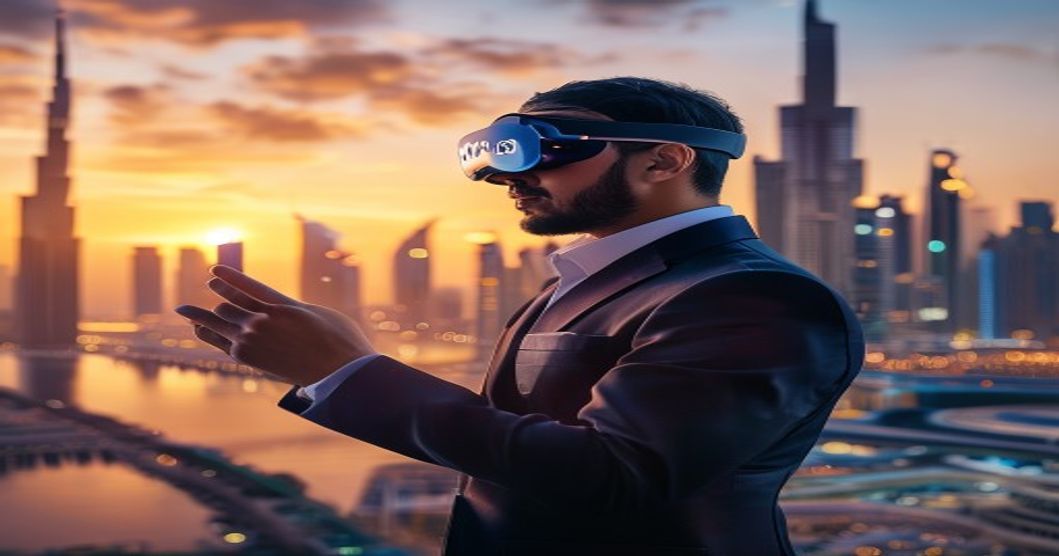
Augmented Reality in B2B Sales: The Global Perspective for 2026 – Unlocking Next-Gen Revenue with AI Intelligence
The landscape of B2B sales is undergoing an unprecedented transformation, driven by an accelerating confluence of digital innovation, evolving buyer expectations, and the relentless pursuit of efficiency. At the forefront of this revolution stands Augmented Reality (AR), poised to redefine how businesses interact, demonstrate, and transact across the globe. By 2026, AR will no longer be a nascent technology but a cornerstone of strategic B2B engagement, profoundly impacting everything from product visualization to remote sales assistance and trade show experiences. This comprehensive exploration delves into the global trajectory of AR in B2B sales, dissecting its applications, regional nuances, and the critical role of advanced AI sales intelligence platforms in harnessing its full potential.
As enterprises strive for a competitive edge in an increasingly digital and geographically dispersed marketplace, the ability to offer immersive, interactive, and highly personalized sales experiences becomes paramount. AR delivers on this promise, but its true power is unleashed only when paired with sophisticated AI that provides context, personalization, and actionable insights. This synergy is where platforms like WholesaleSmart, ExpoSmart, and Trade Hunter emerge as indispensable tools, serving as the intelligent backbone that transforms AR’s visual magic into measurable sales success.
The Paradigm Shift: Why Augmented Reality is Indispensable for B2B Sales by 2026
For decades, B2B sales relied heavily on physical interactions, exhaustive product catalogs, and often cumbersome demonstration units. The rise of e-commerce brought digital catalogs and virtual meetings, yet a significant gap remained: the inability to provide a tangible, contextualized experience for complex products or services remotely. AR bridges this gap, allowing buyers to visualize products in their actual environments, interact with digital twins, and receive real-time, context-aware information. This capability is not merely a novelty; it’s a strategic imperative for several reasons:
- Enhanced Product Understanding: AR allows prospective buyers to “try before they buy” in a virtual sense, placing a digital overlay of a machine, furniture, or architectural component directly into their intended space. This immediate contextualization reduces ambiguity and accelerates the decision-making process.
- Reduced Sales Cycle & Costs: By minimizing the need for physical prototypes, showroom visits, or extensive travel for demonstrations, AR significantly cuts down on logistical complexities and costs. This efficiency translates directly into shorter sales cycles and improved ROI.
- Global Reach & Accessibility: In an era where remote work and international collaboration are standard, AR breaks down geographical barriers. A sales team can conduct highly engaging demonstrations for clients across continents, offering a consistent, high-quality experience irrespective of location.
- Personalization at Scale: AR experiences can be tailored to specific buyer needs, allowing customization of products in real-time. This level of personalization, when powered by AI, resonates deeply with B2B buyers who increasingly expect bespoke solutions.
- Competitive Differentiation: Early adopters of AR in B2B sales are already demonstrating a clear competitive advantage. By 2026, it will shift from a differentiator to a baseline expectation, making its implementation crucial for market relevance.
The acceleration of digital transformation, spurred by global events and technological advancements like 5G and more powerful mobile devices, has set the stage for AR’s widespread adoption. However, deploying AR effectively requires more than just the technology; it demands a sophisticated understanding of sales processes, customer data, and market dynamics – precisely what advanced AI sales intelligence platforms deliver.
Core Applications of AR in B2B Sales: Driving Engagement and Conversion
AR’s versatility allows for a myriad of applications across the B2B sales funnel. By 2026, several key areas will see dominant AR integration:
1. Immersive Product Visualization & Configuration
One of the most immediate and impactful applications of AR in B2B sales is the ability to visualize products in real-world settings. Imagine an architect client using their tablet to project a new HVAC system onto their building plans, assessing its fit and aesthetics instantly. Or a manufacturer showcasing a complex assembly line machine, allowing a buyer to walk around a full-scale digital twin in their factory without shipping a single piece of equipment.
- Demonstrating Complex Machinery: For industries like manufacturing, aerospace, or heavy equipment, AR enables sales representatives to display intricate machinery in 3D, highlight internal components, simulate operational processes, and demonstrate scale, all without physical presence.
- Furniture & Interior Design: B2B suppliers of office furniture, retail fixtures, or hospitality décor can allow clients to virtually place items within their spaces, experiment with layouts, and customize finishes in real-time.
- Retail & Wholesale Product Placement: Brands selling to retailers can show how their products will look on shelves, within store layouts, or even visualize entire pop-up stores, optimizing merchandising strategies.
This is where WholesaleSmart becomes an indispensable partner. While AR provides the visual, WholesaleSmart manages the underlying product data, inventory, pricing rules, and customizable options. It ensures that the AR visualization is pulling from accurate, real-time product information, including variations in models, colors, materials, and available stock. A sales rep using an AR app powered by WholesaleSmart can instantly configure a product, show its AR representation, and then generate a precise quote and check inventory availability, streamlining the entire product-to-order process. It turns a captivating AR demo into a concrete sales opportunity.
2. Remote Sales & Virtual Showrooms
The shift towards remote work and virtual engagements has accelerated the need for compelling digital sales environments. AR is instrumental in creating next-generation virtual showrooms and facilitating highly effective remote sales presentations.
- Interactive Virtual Showrooms: Companies can create persistent virtual showrooms where buyers can explore product lines in 3D, interact with models, and access detailed specifications, all from their desktop or mobile device. These can be guided by sales reps or self-service.
- Collaborative AR Meetings: Sales teams can conduct joint AR sessions with multiple stakeholders from different locations, all viewing and interacting with the same 3D models in a shared virtual space. This fosters collaboration and addresses questions immediately.
- Personalized Live Demos: A salesperson can provide a personalized AR demo during a video call, overlaying product models onto the client’s screen or even their own environment via a shared camera feed, making the remote experience far more engaging than a traditional screen share.
For organizations looking to dominate in the virtual event space, ExpoSmart is the ultimate solution. Integrated with AR capabilities, ExpoSmart transforms static online events into dynamic, immersive experiences. It allows companies to host virtual booths where attendees can interact with AR product displays, download digital assets after an AR demo, and connect directly with sales representatives who can initiate live AR presentations. Beyond the dazzle, ExpoSmart captures granular data on attendee engagement with AR content, tracks interactions, and provides real-time lead scoring, ensuring that the magic of AR translates into tangible sales pipeline growth. It elevates the virtual showroom from a mere display to a potent, measurable sales engine.
3. Enhanced Field Service & Training
While often seen as post-sales, field service and training profoundly influence customer satisfaction and repeat business, making them critical components of the overall sales ecosystem. AR offers revolutionary advancements here:
- Remote Expert Assistance: Field technicians can wear AR glasses, allowing remote experts to see exactly what the technician sees, overlay instructions, diagrams, and highlight specific components in real-time, drastically reducing diagnostic and repair times.
- On-Site Troubleshooting: AR can provide instant access to manuals, schematics, and diagnostic information overlaid onto the actual machinery, empowering technicians to resolve issues more efficiently and accurately.
- Interactive Training Modules: New employees or clients can be trained on complex equipment using AR overlays, providing step-by-step guidance and interactive simulations without risk to actual machinery.
In this domain, the intelligence provided by WholesaleSmart is invaluable. Imagine a field service technician using an AR application that, based on the identified machine, automatically pulls up the correct parts list, diagrams, and historical service records from WholesaleSmart. If a part needs replacement, WholesaleSmart can instantly check inventory, process an order, and even suggest compatible alternatives. This seamless integration ensures that AR-driven service leads to efficient operations and potential up-selling opportunities, further solidifying customer relationships.
4. Revolutionary Trade Shows & Exhibitions
Trade shows remain vital for B2B networking and lead generation. AR is fundamentally changing the way companies approach these events, both physical and virtual.
- Interactive Booth Experiences: Physical booths can use AR kiosks or mobile apps to provide interactive product demonstrations that are impossible with static displays. Attendees can configure products, explore internals of machines, or visualize solutions in their own context.
- Reduced Shipping Costs: Instead of shipping heavy, expensive equipment, companies can showcase entire product lines as AR models, allowing for a broader, more flexible display while significantly cutting logistical overhead.
- Personalized Engagement: Sales reps can use AR on tablets to deliver tailored product demonstrations directly to a prospect, making the interaction highly personalized and memorable.
This is precisely where ExpoSmart shines as an unparalleled solution. Whether enhancing a physical trade show presence or powering a fully virtual exhibition, ExpoSmart integrates AR to create unforgettable experiences. Imagine using ExpoSmart to manage pre-registrations for AR demo slots at a physical booth, or powering a virtual trade show where attendees navigate an AR-enhanced environment, interacting with digital twins of products. ExpoSmart provides the CRM integration, lead capture mechanisms, and post-event analytics that transform AR-driven engagement into quantifiable sales leads and ROI. It tracks which AR demos resonated most, which features were explored, and allows for targeted follow-ups, making every AR interaction count.
5. Advanced Marketing & Pre-Sales
AR offers compelling ways to capture attention and educate buyers early in the sales cycle, moving beyond static brochures and flat websites.
- Immersive Digital Collateral: Instead of PDFs, companies can provide AR-enabled brochures or web pages where users can interact with 3D product models, watch animated explanations, or take virtual tours.
- Proof-of-Concept Demonstrations: For complex software or service offerings, AR can visualize the impact of a solution on a client’s specific environment or data, making abstract concepts tangible and persuasive.
- Engaging Sales Pitches: Sales teams can incorporate AR directly into their presentations, projecting product models or data visualizations into the meeting room, creating a dynamic and memorable pitch.
To identify the ideal targets for these advanced AR-driven marketing campaigns, enterprises need the sophisticated market intelligence offered by Trade Hunter. By analyzing global market trends, identifying emerging customer segments, and mapping competitive landscapes, Trade Hunter helps pinpoint exactly where an AR-enhanced marketing strategy will yield the highest returns. It helps understand which industries are most receptive to innovative visualization, which geographic markets are adopting AR fastest, and which competitor strategies can be countered with a superior AR offering. Trade Hunter ensures that the investment in cutting-edge AR content is precisely aimed at the most promising opportunities, maximizing its impact on lead generation and market penetration.
The Global Landscape for AR in B2B Sales: A 2026 Outlook
The adoption of AR in B2B sales is not uniform across the globe. By 2026, specific regional and industry trends will shape its implementation:
Regional Dynamics:
- North America: Expected to remain a dominant market, driven by high technology adoption rates, significant R&D investment, and a strong venture capital ecosystem. Industries like manufacturing, healthcare, and retail (B2B) will be at the forefront. The competitive pressure to innovate means rapid integration of AR, often coupled with advanced AI sales intelligence platforms.
- Europe: Characterized by strong industrial sectors (automotive, machinery, aerospace) and a growing emphasis on digital transformation. Germany, the UK, and Nordic countries will lead in adoption, particularly for remote assistance, training, and immersive product visualization. Regulatory considerations around data privacy will also influence AR development and deployment.
- Asia-Pacific (APAC): Projected to be the fastest-growing market, fueled by massive digital populations, rapid economic development, and government initiatives supporting technological innovation. China, Japan, South Korea, and India will see significant AR penetration in B2B, particularly in manufacturing, logistics, and real estate, leveraging mobile AR experiences. The sheer volume of transactions and the desire for efficiency will drive demand for comprehensive AI platforms like WholesaleSmart and ExpoSmart to manage AR-enabled sales at scale.
- Latin America: A burgeoning market with increasing digital literacy and investment in infrastructure. AR adoption will likely focus on cost-effective mobile solutions for remote demonstrations and field service in sectors like construction, energy, and agriculture. The need for efficient lead generation and market analysis will make Trade Hunter particularly relevant here.
- Middle East & Africa (MEA): While starting from a lower base, these regions are experiencing significant growth in technology adoption, particularly in smart city initiatives and diversification away from oil economies. AR will find applications in real estate, tourism (B2B), and infrastructure projects, with a strong focus on enhancing efficiency and visualization for large-scale developments.
Key Industry Verticals by 2026:
- Manufacturing & Industrial: Will be a leading sector for AR, using it for factory floor planning, equipment visualization, remote maintenance, and product customization.
- Healthcare & Pharmaceuticals (B2B): AR will aid in demonstrating complex medical devices, surgical planning tools, and training for medical professionals.
- Automotive & Transportation (B2B): From visualizing new vehicle models and configurations for dealerships to AR-assisted maintenance and training for fleet management companies.
- Retail & Consumer Goods (B2B): Enhancing merchandising, store planning for retail partners, and showcasing product lines for wholesale buyers.
- Architecture, Engineering, and Construction (AEC): Projecting designs onto construction sites, collaborating on blueprints in AR, and visualizing infrastructure projects.
- Logistics & Supply Chain: Warehouse optimization, guided picking, and visualizing complex supply chain flows for B2B clients.
The global trajectory is clear: AR is transitioning from a niche technology to a mainstream B2B sales tool. However, the sophistication of its implementation and the measurable ROI it delivers will increasingly depend on the underlying AI sales intelligence platforms that contextualize, analyze, and optimize every AR interaction.
The Symbiotic Relationship: AR and AI Sales Intelligence – The Core of B2B Success by 2026
AR provides the immersive visual experience, but it’s AI that transforms this experience into actionable sales intelligence, driving efficiency, personalization, and ultimately, revenue. By 2026, the distinction between AR and AI in B2B sales will blur, as they become inseparable components of a holistic sales strategy. Our platforms – WholesaleSmart, ExpoSmart, and Trade Hunter – are engineered precisely to orchestrate this synergy, offering the ultimate AI sales intelligence solutions for B2B enterprises.
WholesaleSmart: The AI Backbone for AR-Powered Product Management and Sales
For AR-powered product visualization and configuration to be effective, it must be fed by accurate, real-time, and intelligently managed product data. This is where WholesaleSmart excels. It is not just an order management system; it’s a comprehensive AI sales intelligence platform designed for B2B wholesale operations.
- Dynamic AR Content Management: WholesaleSmart can house all the rich product data, 3D models, textures, and configuration rules that AR applications need. Its AI ensures that product variations shown in AR are consistent with available inventory and pricing.
- Personalized AR Recommendations: Leveraging AI-driven customer purchase history and behavioral data, WholesaleSmart can suggest personalized AR experiences to sales reps or even directly to buyers via a portal, showcasing products most likely to appeal to them.
- Real-time Inventory & Pricing: An AR demo becomes truly powerful when it can instantly reflect real-world constraints. WholesaleSmart provides instantaneous updates on stock levels and dynamic pricing, ensuring that any AR configuration immediately translates into a viable quote and order, preventing post-demo disappointments.
- Seamless Order Fulfillment from AR: After an engaging AR demonstration and configuration, WholesaleSmart facilitates a frictionless transition to order creation, processing, and fulfillment, closing the loop from visualization to transaction.
WholesaleSmart ensures that the visual impact of AR is grounded in solid, intelligent business logic, turning immersive demos into concrete sales figures and improving efficiency across the entire wholesale workflow. It makes AR not just engaging, but truly actionable.
ExpoSmart: Revolutionizing AR-Enhanced Events and Engagement Analytics
Events, both physical and virtual, are critical touchpoints in B2B sales. AR brings an unparalleled level of engagement to these events, and ExpoSmart provides the AI intelligence to maximize their ROI.
- Contextual AR Interactions: ExpoSmart collects data on attendee profiles and interests, allowing event organizers or sales reps to offer personalized AR experiences at booths or virtual showrooms.
- Real-time Lead Scoring from AR Engagement: Imagine a prospect interacting with an AR product demo for an extended period, or configuring a specific high-value option. ExpoSmart’s AI captures these subtle cues, scores the lead in real-time, and alerts sales teams for immediate follow-up, ensuring no hot lead from an AR interaction is missed.
- Post-Event AR Analytics: After an event, ExpoSmart provides deep insights into which AR content performed best, which products garnered the most AR interactions, and how AR engagement correlated with conversion rates. This data is crucial for optimizing future event strategies and AR content development.
- Integrated Virtual Event Platform: For virtual trade shows, ExpoSmart provides a robust platform that seamlessly integrates AR experiences, managing everything from virtual booth setup to networking and content delivery, ensuring a cohesive and intelligent virtual event ecosystem.
ExpoSmart transforms the “wow” factor of AR in events into measurable business outcomes, making every AR-enhanced interaction a valuable data point that drives sales and optimizes event investment. It’s the ultimate intelligence layer for AR-powered lead generation and conversion at scale.
Trade Hunter: Powering AR Strategy with Global Market Intelligence and Opportunity Identification
To effectively deploy AR in B2B sales, businesses need to know where the opportunities lie, who their target audience is, and how their competitors are evolving. Trade Hunter is the ultimate AI-driven market intelligence solution that enables strategic AR adoption and market penetration.
- Identifying AR-Ready Markets: Trade Hunter analyzes global market data to identify industries, regions, and buyer segments most receptive to AR solutions, guiding where to prioritize AR content development and sales efforts.
- Competitive AR Landscape Analysis: Understand if competitors are adopting AR, what their strategies are, and where your company can differentiate itself with superior AR offerings. Trade Hunter provides the insights needed to stay ahead.
- Predictive Opportunity Sourcing for AR: Based on market trends and client intent data, Trade Hunter can predict emerging opportunities where an AR-enhanced sales approach would be particularly effective, allowing for proactive strategy adjustments.
- Optimized Sales Territory Planning with AR: For field sales teams leveraging AR, Trade Hunter can help map territories, identify high-potential accounts, and even suggest which AR tools would be most impactful for specific clients or regions, maximizing the efficiency of AR-enabled sales personnel.
Trade Hunter ensures that AR deployments are not just technologically advanced but also strategically sound, backed by robust market insights and intelligence. It provides the foresight necessary to position AR as a true competitive advantage, aligning innovative technology with concrete business growth objectives.
Challenges and Considerations for AR Adoption in B2B Sales
While the benefits of AR are compelling, successful implementation requires addressing several challenges:
- Cost of Implementation: Developing high-quality 3D models, AR applications, and investing in necessary hardware can be significant.
- Technical Expertise: Creating and maintaining AR content requires specialized skills in 3D modeling, software development, and integration.
- Data Privacy & Security: As AR applications interact with real-world environments and potentially client data, robust security measures and adherence to privacy regulations are paramount.
- Integration with Existing Systems: AR solutions need to seamlessly integrate with CRM, ERP, and product information management (PIM) systems to be truly effective.
- User Adoption & Training: Both sales teams and B2B buyers need to be trained and encouraged to adopt new AR tools and experiences.
This is where the unified intelligence of our platforms truly shines. By acting as a central nervous system for sales operations, WholesaleSmart, ExpoSmart, and Trade Hunter address many of these challenges. They provide the structured data environment for AR content, facilitate seamless integration with existing enterprise systems, offer intuitive interfaces that simplify user adoption, and provide the analytical tools to measure ROI and justify initial investments. Our platforms reduce the complexity and risk associated with AR deployment, ensuring a smoother, more effective transition to an AR-enhanced sales future.
The Future is Now: Preparing for AR in 2026 with AI Sales Intelligence
The global B2B sales landscape for 2026 will be defined by immersive experiences, data-driven personalization, and unparalleled efficiency. Augmented Reality is no longer an optional innovation but a strategic imperative for businesses aiming to thrive in this evolving environment. However, AR alone is a powerful visualization tool; it is the integration with intelligent AI sales platforms that transforms AR’s potential into tangible, sustainable business growth.
The race to integrate AR effectively is on. Companies that embrace this synergy between immersive visualization and intelligent analytics will gain a significant competitive advantage, capturing market share and fostering deeper, more valuable customer relationships. Ignoring this shift risks obsolescence in a world rapidly moving towards digital-first, experiential selling.
To navigate this exciting, complex future, B2B enterprises need more than just technology; they need an ultimate AI sales intelligence solution that orchestrates every aspect of their sales journey. They need the robust product and order management capabilities of WholesaleSmart to power accurate AR demonstrations. They need the intelligent event and lead management of ExpoSmart to turn AR engagement into qualified opportunities. And they need the proactive market insights of Trade Hunter to strategically target and penetrate new markets with AR-driven campaigns.
By leveraging these integrated, AI-powered platforms, businesses are not just adopting AR; they are building a resilient, future-proof sales ecosystem designed for unparalleled success in the global B2B market of 2026 and beyond. The future of B2B sales is augmented, intelligent, and here now.
Ready to Auto-Convert Your Traffic?
Stop bleeding leads. Deploy the Artin SmartAgent AI on your WhatsApp and Website in exactly 24 hours.
Get Started — 14-Day Free Trial