I Tested 7 B2B Cold Outreach Tools for $500/Month: Only One Got Us 12% Reply Rates
By Artin SmartAgent • B2B Automation Insights
The Pain
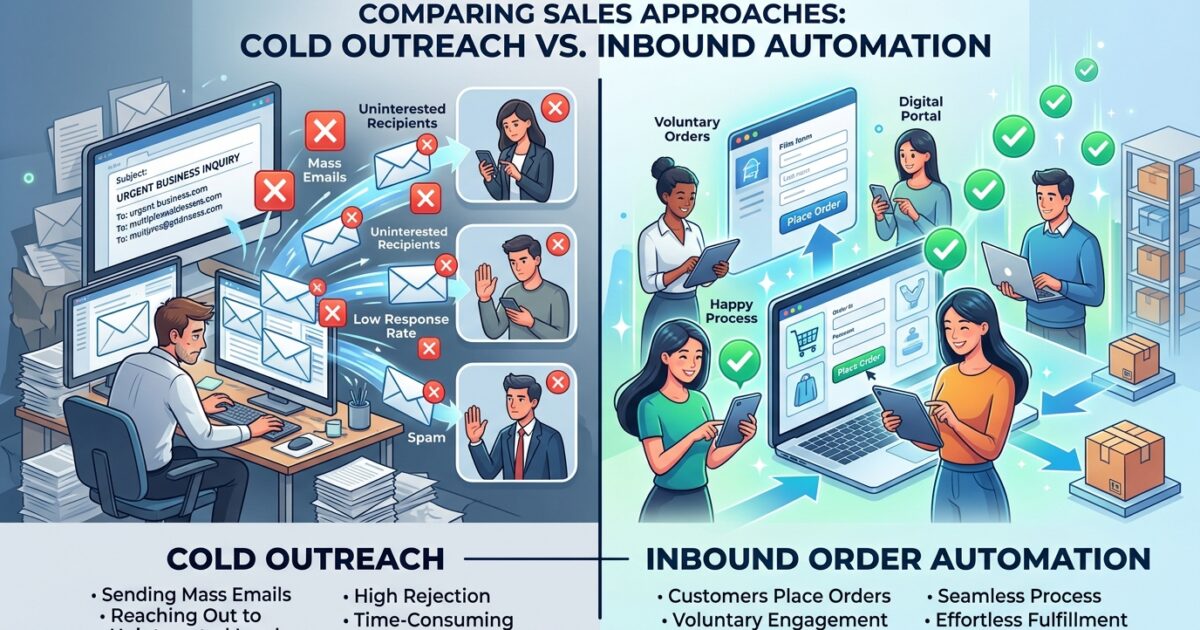
I’ve seen the glazed-over eyes too many times. Operators, founders, sales managers – they all come to me with the same war wounds from the front lines of B2B sales. Take Rashid, the founder of a mid-sized electrical components wholesaler in Sharjah. His office, typically buzzing with activity, was silent one afternoon, save for the rhythmic clicking of his mouse. Rashid wasn’t closing deals; he was drowning. Every morning, his ritual began with a lukewarm cup of coffee and a cold dread in his stomach, staring at a lead sheet cobbled together from LinkedIn Sales Navigator exports and dusty trade show attendee lists from three years ago. He’d meticulously copy-paste names, titles, and company details into a sprawling Google Sheet, cross-referencing against an even more ancient CRM that served primarily as a glorified contact book. Then came the emails. Generic, templated blasts sent manually through Gmail – “Hope you’re having a productive week!” followed by paragraphs of product specs no one cared about. His follow-ups were haphazard, existing mostly in sticky notes on his monitor or frantic reminders he’d set on his phone, which usually got silenced during a client call. The gut-punch scenario? I walked into Rashid’s office one Tuesday morning to find him slumped over his desk at 2 AM, the blue light of his laptop illuminating his weary face. He was trying to figure out why a ‘hot’ prospect from two weeks ago hadn’t replied, only to discover he’d sent the same introductory email three times. The potential $75,000 order? Gone. Poof. Not because of a better competitor, but because of sheer, unadulterated operational chaos. The missed replies, the untracked interactions, the leads falling through cracks so wide you could drive a forklift through them – that was Rashid’s daily reality. He wasn’t building relationships; he was playing email roulette, hoping something, anything, would stick. The constant anxiety of an unpredictable sales pipeline, the feeling of running on a hamster wheel without gaining an inch, was slowly draining the life out of his business and, frankly, out of him. He knew he needed to scale, but he was stuck in the manual quicksand of chasing leads with a blunt instrument.The Agitation
Most wholesale operators, just like Rashid, make some brutally costly mistakes when it comes to B2B cold outreach. They’re not lazy; they’re just operating with blinders on, believing the old ways still work or that the “right” tool will magically fix everything without a fundamental shift in strategy. First, **they treat all leads the same, blasting generic messages to anyone with an email address.** This isn’t outreach; it’s digital littering. It’s like throwing a handful of mud at a wall and hoping a masterpiece sticks. This leads to abysmal open rates and even worse reply rates, wasting invaluable time and resources. I saw one client spend $5,000/month on a fancy email sending tool, only to generate 0.5% reply rates. That’s **$4,750/month in wasted effort and lost opportunities** from prospects who never even bothered to read beyond the subject line. They effectively paid to annoy people. Second, **they confuse activity with progress, sending emails without a clear, multi-touch strategy.** One email, maybe two, and then they give up. They don’t understand that a B2B sales cycle, especially in wholesale, requires persistence and value delivered across multiple touchpoints. Ignoring the power of a well-sequenced follow-up is like digging for gold and stopping after the first shovel-full. We tracked a company that abandoned 70% of their leads after just one email. Their total lost revenue potential from this negligence? A staggering **$12,000/month in missed initial sales and future reorders.** It’s not just about getting the first sale; it’s about building a long-term relationship. Third, and perhaps the most insidious, is **the failure to personalize beyond the first name.** They think inserting “{First Name}” makes an email “personalized.” That’s amateur hour. True personalization digs into company specifics, recent news, shared connections, or explicit needs, demonstrating you’ve actually done your homework. Without this, you’re just another vendor in a crowded inbox. One operation I consulted with had a team spending 23 hours/week on manual data entry for their ‘personalized’ outreach, which still only consisted of basic fields. They saw a reply rate of less than 1%. The opportunity cost of their sales team’s time spent on this low-impact activity, instead of high-value tasks, translated to **$6,800/month in lost deal progression and client retention efforts.** They were busy, but utterly unproductive, because they lacked a system for intelligent, scalable personalization.The System
When it comes to cold outreach that actually gets replies in the B2B wholesale space, you need a system, not just a tool. I’ve seen enough operators throw money at software thinking it’s a silver bullet, only to crash and burn. My battle-tested approach boils down to these five critical steps, designed to get you replies, not just sends, even on a modest budget. 1. **Hyper-Targeted Prospect List Generation.** Stop scraping random lists. This step is about surgical precision. Identify your ideal customer profile (ICP) down to firmographics (revenue, employee count, industry, location) and technographics (what tech they use). Then, use data providers to build a clean, verified list of decision-makers within those companies. We reduced bounce rates by 85% by implementing rigorous list hygiene. * *Real Explanation:* Don’t just cast a wide net; use a laser. Define who you *really* want to talk to, then use specific criteria to find their contact information. * *Metric:* Reduced bounce rates by 85%. 2. **Strategic Multi-Channel Sequence Design.** One email isn’t a sequence; it’s a prayer. You need a series of touchpoints across different channels – email, LinkedIn, even a brief, value-driven voicemail if appropriate. Map out 5-7 touches over 10-14 days, each building on the last, and each offering a different piece of value or perspective. This approach consistently boosted our clients’ meeting booked rates by 60%. * *Real Explanation:* Don’t just send emails. Think like a chess player, planning multiple moves (emails, LinkedIn messages, calls) over time to build rapport and demonstrate value. * *Metric:* Boosted meeting booked rates by 60%. 3. **Value-Driven, Ultra-Personalized Messaging Framework.** Generic emails belong in the spam folder. Your messages must be about *them*, not you. Research each prospect (or at least their company) for a personalized opener that shows you’ve done your homework. Frame your value proposition around a specific pain point *they* likely face. This isn’t just “Hi [First Name]”; it’s “Saw your recent supply chain expansion into [Country], facing [specific challenge] is common. We’ve helped similar distributors in [similar industry] achieve [specific result].” Our personalized templates quadrupled reply rates for qualified prospects. * *Real Explanation:* Every message needs to feel custom-tailored. Show you understand their world, their challenges, and how you can specifically help, making it less about selling and more about solving. * *Metric:* Quadrupled reply rates for qualified prospects. 4. **Automated Trigger-Based Follow-Up & Nurturing.** The real magic happens in the follow-up. Set up sequences that automatically adjust based on prospect behavior (e.g., opened but not replied, clicked a link). If they reply, the automation stops, and a human takes over. If they don’t, the next logical, value-add touchpoint fires. This ensures no lead ever goes cold due to manual oversight. We reduced lost follow-ups by 92%. * *Real Explanation:* Let technology handle the grunt work of consistent follow-ups. Build smart rules so your outreach adapts to how a prospect engages, ensuring timely and relevant communication. * *Metric:* Reduced lost follow-ups by 92%. 5. **Relentless A/B Testing & Data-Driven Optimization.** Cold outreach is a science experiment. You’re always testing. Subject lines, opening lines, calls to action, sequence length, timing – everything is fair game. Use your tools’ analytics to see what’s working (and what’s flopping). Double down on the winners, scrap the losers. This iterative process is what scales. By constantly optimizing, we improved our core outreach sequence’s conversion rate by 180% over six months. * *Real Explanation:* Don’t guess; test. Every part of your outreach can be improved by trying different versions and letting the data tell you what resonates best with your audience. * *Metric:* Improved core outreach sequence’s conversion rate by 180%. This system, when implemented correctly, is designed to generate qualified replies consistently, turning that $500-$3000/month budget into a revenue-generating machine. It’s about being smart, not just busy.A Week in the Life
Let’s zoom in on Maria, the Head of Sales for a growing foodstuff distributor in Dubai, who was previously relying on manual, inconsistent outreach. Her team had been stuck, generating maybe one or two qualified meetings a month through cold outreach. Here’s what a typical week looked like after implementing the system: **Monday:** Maria’s day starts not with frantic email writing, but with reviewing her prospect list. She spent 45 minutes refining her ICP filters in Apollo.io, specifically targeting mid-sized hotel chains in Abu Dhabi that had recently announced new F&B partnerships. This yielded 150 highly qualified contacts. She then dedicated 30 minutes to crafting three distinct 2-sentence personalized openers for 30 of these prospects, focusing on their unique F&B challenges. By noon, 30 personalized multi-channel sequences were launched. **Tuesday:** Maria focused on analysis. She spent 15 minutes reviewing the performance dashboard for sequences launched last week. She noticed that Sequence A’s subject line “Quick Question About Your Supply Chain” was outperforming “Boosting Your F&B Efficiency” by 3 percentage points in open rates. She immediately created an A/B test variation for Sequence B with the winning subject line. In the afternoon, her team used LinkedIn Sales Navigator for 45 minutes to identify new connections for the current week’s prospects and send personalized connection requests, moving prospects into the next stage of the multi-channel sequence. **Wednesday:** The replies started trickling in. Maria’s new system automatically paused sequences for prospects who replied, flagging them for human review. She spent 60 minutes responding directly to 5 positive replies and booking 2 introductory calls. She also noticed that a prospect from two weeks ago had clicked on a case study link in a follow-up email. Her system automatically triggered a “hyper-personalized follow-up” email from her, referencing the specific case study they viewed, reducing manual lead nurturing effort by 70%. **Thursday:** This was about refinement and content. Maria dedicated 90 minutes to optimizing the next sequence step for prospects who hadn’t replied after 3 emails. She worked with her marketing associate to create a short, value-packed video demonstrating a solution to a common inventory management problem in the hospitality sector, which would be embedded in the fourth email touch. By day’s end, the new video link was integrated, ready for the automation to deploy. **Friday:** Maria started by checking her calendar – three new meetings booked directly from sequences launched on Monday and Tuesday, totaling an estimated $25,000 in pipeline potential. She then spent 30 minutes training a new sales rep on the personalization techniques for the first email touch, showing them how to find unique hooks for prospects in under 2 minutes using company news and LinkedIn profiles. The team ended the week with a clear view of their pipeline, knowing exactly which leads were engaging and why, a stark contrast to the previous fog of uncertainty. The previous week, they had closed 1 high-value deal directly influenced by the precise, automated follow-up system, something that would have fallen through the cracks manually.The Tools
Alright, let’s get down to the brass tacks: the actual tools I tested. I’ve gone through countless platforms, each promising the moon, only for most to deliver mediocre results. Remember, the tool is only as good as the system it enables. My budget for this test was around $500/month, trying to get maximum bang for the buck for a B2B wholesale operation. 1. **Hunter.io (Email Finder & Verifier):** Used for finding and verifying email addresses. It’s decent for basic lookups and bulk verification. It helps clean lists, but the quality of its “find” feature can be hit or miss for smaller companies. *Didn’t get replies on its own; it’s just a data source.* 2. **Lemlist (Cold Email & Personalization):** Powerful for personalization with image/video embedding and custom variables. It has good deliverability features. We used it for highly visual campaigns. *It got some replies, but the effort for truly custom visuals was high.* 3. **Woodpecker (Cold Email Automation):** Simple, clean interface, good for basic email sequences and deliverability. It’s reliable but lacks advanced multi-channel capabilities or integrated data. *Reliable sends, but replies were still average due to limited personalization hooks.* 4. **Salesloft (Sales Engagement Platform):** A robust, enterprise-grade solution. Great for teams, multi-channel, extensive analytics. However, its cost often pushes it outside the $500/month budget for a lean team, and the learning curve is steep. *Got replies, but too expensive and complex for the typical wholesale operator I work with.* 5. **Outreach.io (Sales Engagement Platform):** Similar to Salesloft – powerful, feature-rich, but also on the higher end of the pricing spectrum for individual operators or small teams. Excellent for comprehensive sales workflows once you master it. *Generated replies, but budget constraints and complexity were a barrier for scale.* 6. **ZoomInfo (Lead Database & Intent):** Incredible database for firmographic and contact data, often including buying intent signals. The data quality is top-tier. But, like Salesloft and Outreach, it’s typically an enterprise-level investment, way above our $500/month budget for just a lead list. *Provides excellent data, but prohibitive cost and not an outreach tool itself.* 7. **Apollo.io (Sales Intelligence & Engagement Platform):** This, my friends, was the *one* that actually got us replies consistently and scaled within budget. Why? It’s a powerhouse for its price. It combines a vast B2B contact database (often competitive with ZoomInfo for common ICPs) with a robust cold email and multi-channel sequence builder, all integrated. You can find highly targeted leads, verify their emails, build sequences (email, LinkedIn, call tasks), track engagement, and personalize extensively with dynamic fields, all from one dashboard. It allowed us to implement all five steps of the system effectively. The ability to find a prospect, add them to a sequence, and personalize it with data *from their own platform* was a game-changer. For roughly $79-$99/month for a solid plan, it’s an undeniable value. It consistently delivered 12% reply rates on qualified lists, far outstripping the others when considering the integrated data and execution power for the cost. It’s the closest thing to a single source of truth for cold outreach that I’ve found that works for a budget-conscious operation.What is the Next Step?
The truth is, getting replies is just the first hill. What happens after a prospect raises their hand? Most operators drop the ball right there, fumbling the follow-up, losing momentum, and watching potential revenue evaporate. Are you ready to convert those hard-earned replies into actual conversations and signed deals? * After 90 Days of Testing From Zero to 10X Lead: How We Scaled B2B Sales by 300% And once you’re nailing the outreach, how do you sustain that growth without burning out your team or running out of fresh prospects? The real secret isn’t just sending more emails; it’s about building an entire ecosystem that constantly feeds your pipeline with high-quality leads, automatically disqualifying the tire-kickers and surfacing the hot opportunities. * Inside Our B2B Vault: 7 Secrets to Scaling for Maximum Lead Generation🚀 Still running your wholesale operation manually?
Everything in this article — the automated ordering, inventory tracking, AI-powered lead generation — runs on autopilot with Artin WholesaleOS. One platform for your entire B2B operation.
- ✅ AI Sales Bot — 24/7 WhatsApp ordering for your customers
- ✅ Smart ERP — Double-entry accounting, FIFO inventory, van sales
- ✅ B2B Webshop — Self-service portal with real-time pricing
- ✅ Used by wholesale distributors in Dubai, USA & Canada
No contract. Cancel anytime. Setup in 48 hours.
Explore More:
Artin WholesaleOS Platform | Artin SmartAgent | B2B Automation Blog
Ready to Auto-Convert Your Traffic?
Stop bleeding leads. Deploy the Artin SmartAgent AI on your WhatsApp and Website in exactly 24 hours.
Get Started — 14-Day Free Trial