Quick Summary
- Manual order entry creates a critical time lag between when an order is received and when it becomes visible to your warehouse, causing significant downstream delays.
- This “front-office lag” is a primary driver of warehouse idle time and driver overtime, directly inflating labor costs throughout the supply chain.
- Distributors can calculate this hidden expense by measuring the initial data entry delay and tracking its cascading impact on warehouse and logistics teams.
- Automating order ingestion with platforms like Artin SmartAgent eliminates the root cause of the problem, allowing the fulfillment process to begin instantly.
The Hidden Connection Between Order Entry and Overtime
When wholesale distributors see rising overtime costs, investigations typically focus on warehouse efficiency or driver route planning. While these are valid concerns, the root cause often lies upstream in a place many overlook: the front office.
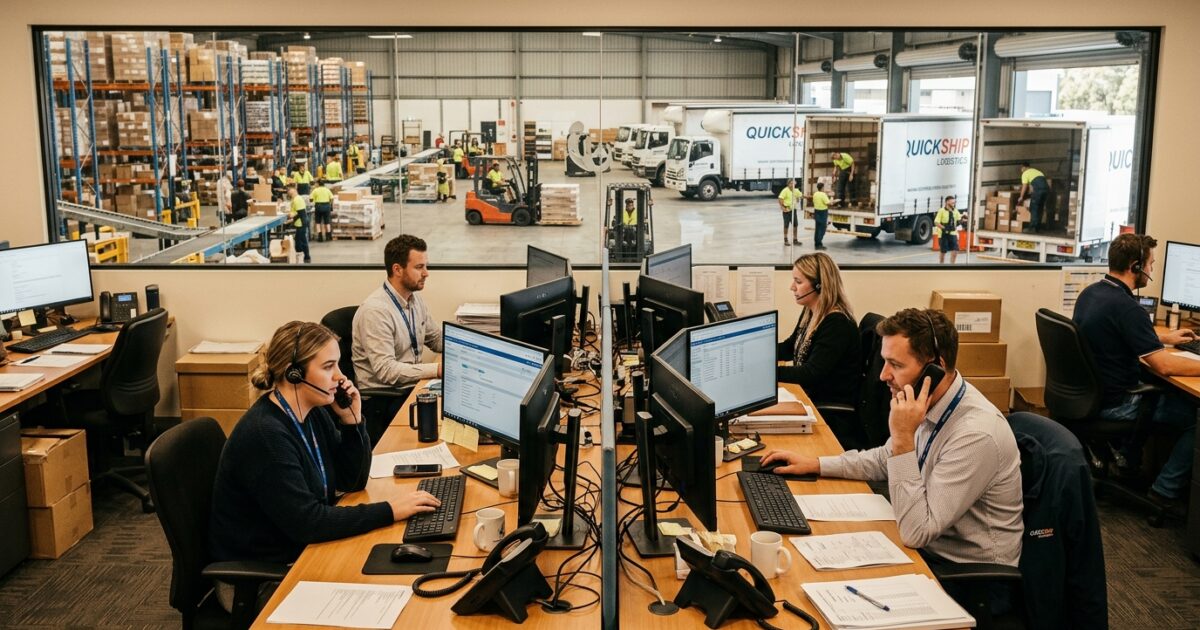
Consider a common scenario. Your official order cutoff is 4:00 PM, but your customer service team is manually keying in emailed or phoned orders until 5:30 PM. This data entry backlog means the warehouse cannot begin, let alone complete, its picking and packing operations on schedule.
This single delay creates a cascade of inefficiency. Trucks that should be loaded and ready for an early departure are held up. This waiting period is a direct, tangible expense that translates into wasted wages and operational friction, eroding profit margins.
A Framework for Calculating the Financial Impact
To solve the problem, you must first quantify it. Moving beyond assumptions requires a clear, data-driven methodology to measure the real cost of front-office delays. The following steps provide a framework for calculating this hidden expense.
Step 1: Quantify the Order Entry Lag
First, establish a baseline. On a typical business day, track the exact time of receipt for a sample of orders arriving via email or voicemail. Compare this to the ERP timestamp for when each order was fully entered and became visible to the warehouse team.
The difference between these two times is your order entry lag. Calculating the average lag across numerous orders provides a clear metric for the initial delay introduced by your manual processes.
Step 2: Measure Consequent Warehouse Idle Time
Next, consult with your warehouse manager to determine the time your picking and packing teams spend waiting for the day’s final orders to appear in the system. This idle period is a direct and quantifiable cost to the business, representing paid but non-productive labor.
If four warehouse employees are idle for 45 minutes at the end of their shift, that amounts to three hours of wasted labor costs each day.
Step 3: Calculate Compounded Driver Delay Costs
When warehouse operations run late, truck loading is inevitably delayed. This forces drivers to start their routes behind schedule, frequently pushing them into overtime. Document the frequency and duration of these morning delays to understand the full scope of the issue.
Multiply the average delay by each driver’s hourly rate, including any overtime premiums. A seemingly small daily delay for multiple drivers quickly accumulates into a significant annual expense.
Example Calculation
A distributor with five trucks experiences a consistent 30-minute loading delay caused by slow order entry. This impacts a four-person warehouse team earning $25/hour, costing $50 per day in unproductive time (0.5 hours x 4 people x $25/hr).
If the five drivers also wait 30 minutes at a rate of $30/hour, that adds another $75 daily (0.5 hours x 5 people x $30/hr). This 30-minute bottleneck costs the business $125 per day, or over $30,000 annually, before accounting for missed delivery windows or customer dissatisfaction.
The Path to Resolution: Automating at the Source
Addressing this challenge requires fixing the bottleneck where it begins. Software automation provides a direct and effective solution to the manual data entry problem by targeting the source of the delay.
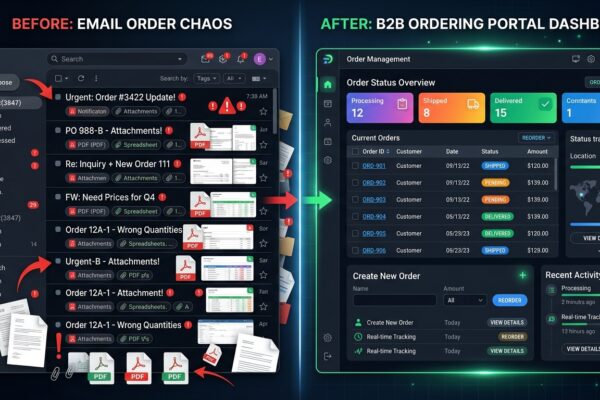
Platforms like Artin SmartAgent are purpose-built to intercept and process incoming orders automatically. The system reads orders from emails, texts, and even transcribed voicemails, writing the data directly into your ERP in near real-time. This ensures the warehouse receives the pick list moments after the customer places their order.
While automation cannot fix a disorganized warehouse or suboptimal routing, it removes a primary constraint on the entire system. By providing your fulfillment teams with timely and accurate data, you create the operational capacity they need to perform efficiently and keep your distribution network on schedule.
Frequently Asked Questions
What is the first step to identifying an order entry bottleneck?
The first step is a time-stamp analysis. Conduct an audit where you record the exact time an order is received (e.g., in an email inbox) and compare it to the time it is fully entered and visible in your ERP. The gap between these two points is your order entry lag.
How does automating order entry reduce warehouse overtime?
Automation eliminates the manual data entry process, which is the primary bottleneck between order receipt and fulfillment. By feeding orders directly into the warehouse management system instantly, it allows picking and packing teams to work continuously and finish tasks on time, preventing the need for overtime.
Isn’t this just a warehouse efficiency problem?
Even the most efficient warehouse team cannot pick orders they do not have. If the front office is delayed in entering orders into the system, the warehouse is forced into a reactive state while waiting for information. The problem originates upstream, and solving it there empowers the warehouse to operate at its full potential.
What types of orders can a system like Artin SmartAgent automate?
Modern automation platforms like Artin SmartAgent are versatile. They are designed to process unstructured data from various sources, including orders sent within the body of an email, attached as PDFs or spreadsheets, sent via text message, or even left as a voicemail that can be transcribed and interpreted.
Ready to Auto-Convert Your Traffic?
Stop bleeding leads. Deploy the Artin SmartAgent AI on your WhatsApp and Website in exactly 24 hours.
Get Started — 14-Day Free Trial